

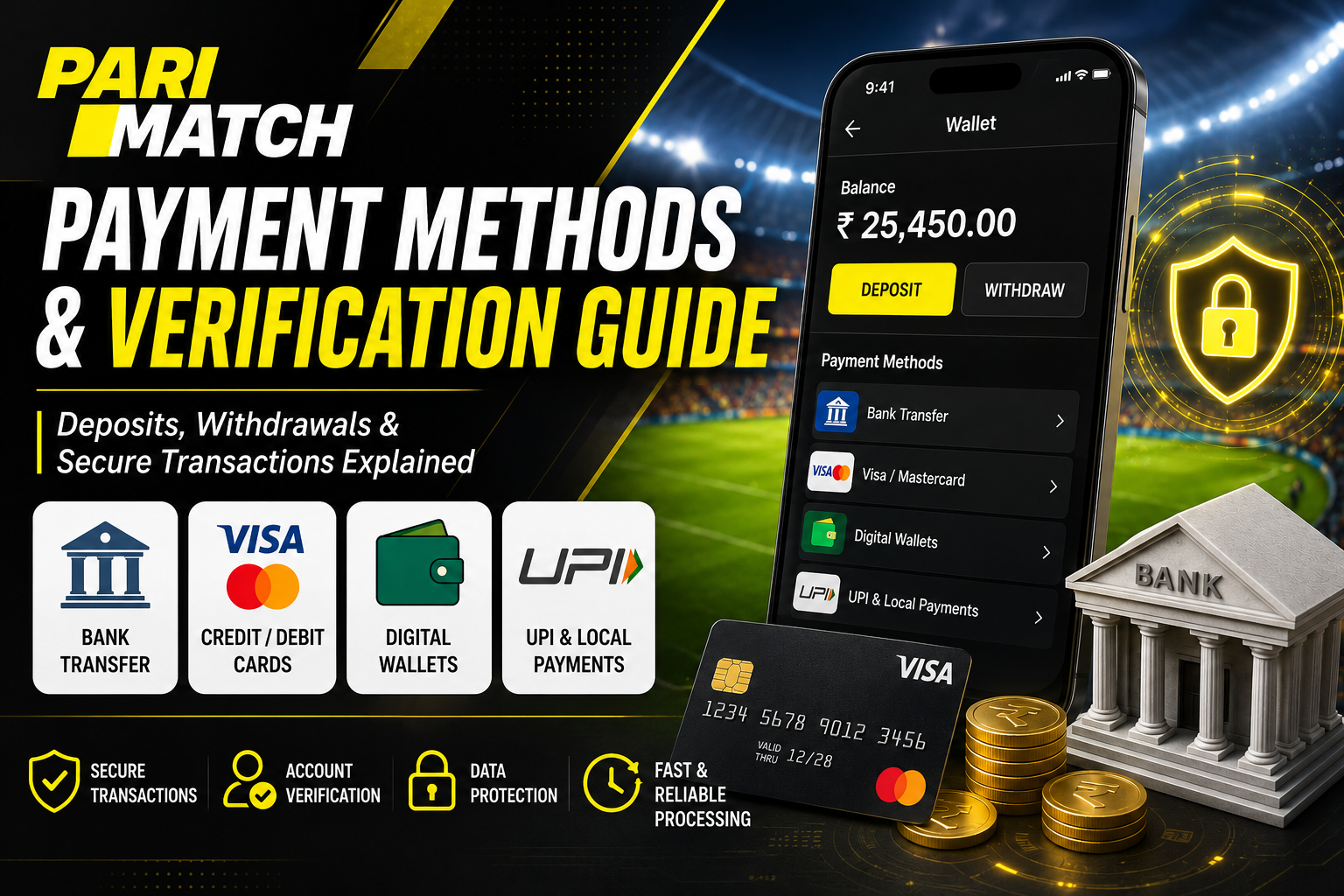
When using any online platform that involves financial transactions, understanding the available payment methods and the verification process is essential. Whether you’re researching how online payment systems work or looking to understand the payment features associated with Parimatch, having accurate information can help you make informed decisions and avoid common issues.
This guide provides a neutral overview of Parimatch payment methods, explains how deposits and withdrawals generally function on online platforms, discusses why account verification is important, and highlights best practices for secure online transactions. It is intended for informational purposes only and does not encourage or promote gambling.

Understanding Online Payment Systems
Most online platforms that handle user funds provide multiple payment options to accommodate users from different regions. The exact methods available may vary depending on local regulations, banking partners, and the user’s country of residence.
Payment systems are generally designed to provide:
- Secure fund transfers
- Convenient payment options
- Identity verification
- Fraud prevention
- Compliance with financial regulations
Before making any transaction, users should review the platform’s official payment policies and applicable terms.
Common Payment Methods
Online platforms typically support a range of payment options. Availability may differ by location.
Bank Transfers
Bank transfers remain one of the most widely used payment methods.
Advantages
- Supported by most financial institutions
- Suitable for larger transactions
- Secure banking infrastructure
Considerations
- Processing times may be longer than some digital payment methods.
- Banks may perform additional security checks.
Debit and Credit Cards
Many users prefer Visa or Mastercard because they are familiar and widely accepted.
Benefits include:
- Quick deposits
- Easy transaction tracking
- Broad international acceptance
However, card issuers may have their own policies regarding transactions with certain online services.
Digital Wallets
Depending on the region, digital wallets may be available.
Potential benefits include:
- Faster processing
- Reduced need to enter banking details repeatedly
- Additional security through wallet authentication
Supported providers vary by jurisdiction.
UPI and Local Payment Methods
In markets where Unified Payments Interface (UPI) or similar local payment systems are available, users may have additional options for transferring funds.
Local payment methods often offer:
- Familiar user experience
- Mobile-friendly transactions
- Integration with domestic banking systems
Availability depends on local regulations and platform support.
Understanding Deposits
A deposit refers to transferring funds from a user’s payment method into their account balance on a platform.
Although the exact interface may differ, the process generally includes:
- Logging into the account.
- Opening the Payments or Wallet section.
- Selecting Deposit.
- Choosing an available payment method.
- Entering the amount.
- Confirming the transaction.
Some transactions may require additional authentication, such as a one-time password (OTP) or bank verification.
Factors That May Affect Deposits
Several factors can influence whether a deposit is processed successfully.
Payment Method Availability
Not every payment option is available in every country. Platforms often tailor available methods based on regional banking systems and legal requirements.
Bank Security Checks
Banks sometimes perform fraud prevention checks before approving online transactions.
These checks may include:
- OTP verification
- Device recognition
- Transaction confirmation through banking apps
Internet Connectivity
Interrupted internet connections may affect payment processing or confirmation screens.
If a transaction appears incomplete, users should avoid making repeated payment attempts until they confirm the status through their bank or payment provider.
Understanding Withdrawals
A withdrawal is the process of transferring available funds from a platform back to a user’s selected payment method.
The general process usually involves:
- Opening the Withdrawal section.
- Selecting a supported payment method.
- Entering the withdrawal amount.
- Completing any required verification.
- Submitting the request.
After submission, the request may undergo internal review before processing.
Why Withdrawal Processing Times May Vary
Processing times are influenced by several factors, including:
- The selected payment method
- Banking hours
- Weekends or public holidays
- Identity verification status
- Internal compliance reviews
Different financial institutions also have different settlement timelines.
For this reason, users should refer to the platform’s official policies for estimated processing times.
Minimum and Maximum Transaction Limits
Many online services establish minimum and maximum limits for deposits and withdrawals.
These limits may depend on:
- Payment provider policies
- Account status
- Verification level
- Local regulations
Checking current limits before initiating a transaction can help avoid unnecessary delays.
Why Account Verification Is Important
Identity verification is a standard practice across many online financial platforms.
It serves several purposes, including:
- Protecting user accounts
- Preventing unauthorized access
- Reducing fraud
- Meeting legal and regulatory obligations
- Supporting anti-money laundering (AML) requirements
Verification helps ensure that transactions are conducted by the legitimate account holder.
Documents Commonly Requested for Verification
Depending on the platform and applicable regulations, users may be asked to provide documents such as:
- Government-issued photo identification
- Proof of address
- Confirmation of the payment method used
- A recent bank statement or utility bill
Requirements vary by jurisdiction and should be reviewed through official guidance.
Security During Payment Transactions
Protecting financial information is an important part of using any online service.
Use Official Platforms
Only access payment features through the platform’s official website or verified mobile application.
Avoid entering payment details on unofficial websites or links received from unknown sources.
Enable Two-Factor Authentication
If available, enabling two-factor authentication (2FA) can provide an extra layer of protection by requiring a second verification step during login or other sensitive account actions.
Monitor Your Account
Review your account activity regularly for unfamiliar transactions or login attempts.
If anything appears unusual, change your password promptly and contact the platform’s official support team.
Keep Your Device Updated
Using the latest operating system and application updates helps protect against known security vulnerabilities.
Installing reputable antivirus software, where appropriate, can also improve device security.
Common Payment Issues and Possible Solutions
Although many transactions are completed without difficulty, users may occasionally experience problems.
Deposit Not Reflected
Possible reasons include:
- Banking delays
- Pending payment authorization
- Internet interruption
- Temporary system maintenance
Before attempting another deposit, verify whether the original transaction has been completed.
Withdrawal Pending
A pending withdrawal does not necessarily indicate a problem.
The request may still be undergoing:
- Identity verification
- Security review
- Payment provider processing
If the waiting time exceeds the timeframe stated in the platform’s policies, users can contact official customer support for clarification.
Verification Delays
Verification requests may take longer if:
- Documents are unclear or incomplete.
- Submitted information does not match account details.
- Additional information is required.
Submitting accurate and legible documents can help reduce delays.
Best Practices for Safe Online Payments
Regardless of the platform you use, following basic online payment safety practices is recommended.
- Use strong, unique passwords.
- Never share OTPs or verification codes.
- Avoid conducting sensitive transactions over unsecured public Wi-Fi.
- Keep your browser and operating system updated.
- Review account statements regularly.
- Save transaction confirmations when appropriate.
These habits can help improve security across many online services.
Frequently Asked Questions
Which payment methods are typically available?
Available payment methods vary by region and may include bank transfers, debit or credit cards, digital wallets, and local payment systems where supported.
Why is account verification required?
Verification helps confirm user identity, reduce fraud, and comply with applicable financial and legal requirements.
How long do withdrawals usually take?
Processing times depend on the selected payment method, banking systems, verification status, and internal review procedures. Users should consult the platform’s official policies for current estimates.
Can deposits or withdrawals be delayed?
Yes. Delays may occur because of banking processes, technical issues, security checks, or incomplete verification.
How can I make my transactions more secure?
Using official websites, enabling two-factor authentication, keeping devices updated, and protecting login credentials are among the most effective ways to improve payment security.
Final Thoughts
Understanding Parimatch payment methods, deposits, withdrawals, and verification requirements can help users navigate online financial transactions more confidently. While payment options and processing times vary depending on region and provider, the underlying principles remain consistent: secure payment processing, identity verification, and fraud prevention.
Before making any transaction, users should carefully review the platform’s current payment policies, eligibility requirements, and applicable local regulations. Following good cybersecurity practices—such as using strong passwords, enabling two-factor authentication, and verifying official payment channels—can help protect personal and financial information across a wide range of online services.