

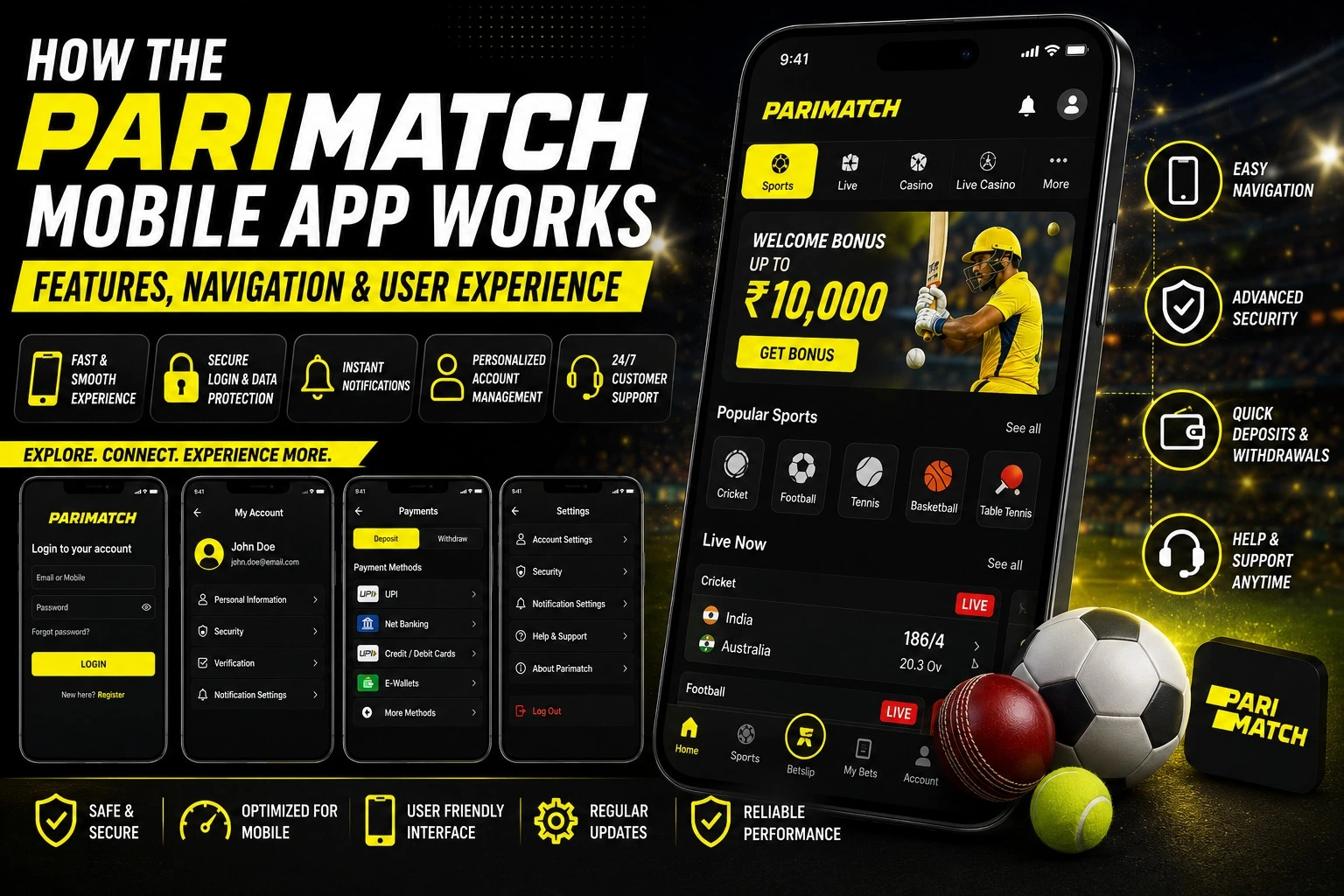
Mobile applications have become the preferred way for many people to access online services. From banking and shopping to streaming and communication, apps are designed to provide a faster and more convenient experience than mobile websites. Online entertainment platforms have also adopted this approach by offering dedicated mobile applications with interfaces optimized for smartphones and tablets.
If you’re researching the Parimatch mobile app, understanding how it works can help you navigate its features more effectively. This guide explains the app’s general functionality, interface, account management options, security settings, and common troubleshooting tips. The information provided here is educational and does not encourage participation in gambling or any other regulated activity.

Why Mobile Apps Are Popular
Compared with traditional desktop websites, mobile apps offer several advantages for users who prefer accessing services on their smartphones.
Some commonly reported benefits include:
- Faster loading times
- Touch-friendly navigation
- Optimized layouts for smaller screens
- Personalized settings
- Push notifications (if enabled)
- Improved device integration
These features contribute to a smoother user experience, particularly for people who frequently use mobile devices throughout the day.
Getting Started with the App
Before using the application, users generally need to install it on a compatible device.
The basic setup process typically includes:
- Downloading the application from an official source.
- Installing the latest version.
- Opening the app.
- Logging in with an existing account or registering a new one if available.
- Completing any required security verification.
Keeping the application updated helps ensure access to the latest security improvements and feature enhancements.
Understanding the Home Screen
The home screen serves as the central navigation area of the application.
Although the layout may change with updates, users can generally expect to find:
- Main navigation menu
- Account section
- Search function
- Notification center
- Settings menu
- Help or support section
The interface is designed to allow users to move between sections with minimal navigation.
Navigation and User Interface
A well-designed mobile application focuses on simplicity and ease of use.
Menu Navigation
Most mobile apps organize features into categories that can be accessed through a bottom navigation bar or side menu.
Typical sections may include:
- Home
- Account
- Payments
- Settings
- Help
This structure helps users locate information more efficiently.
Search Functionality
Search tools allow users to quickly locate specific content without browsing through multiple menus.
Depending on the platform, search results may update automatically as users type.
Personalized Dashboard
Many modern applications include a dashboard displaying account-related information such as profile settings, recent activity, and notifications.
The exact information shown depends on the platform and the user’s account status.
Account Management Features
Managing an account through a mobile application is often more convenient than using a browser.
Common account management options include:
Updating Personal Information
Users may be able to update:
- Email address
- Mobile number
- Password
- Communication preferences
Changes to sensitive information may require additional verification.
Password Management
The app typically allows users to:
- Change passwords
- Reset forgotten passwords
- Review recent login activity
- Enable additional security features
Strong, unique passwords help improve account security.
Notification Preferences
Many applications allow users to customize which notifications they receive.
Examples include:
- Account updates
- Security alerts
- Promotional messages (where applicable)
- System announcements
Users can usually modify these settings within the app or through their device’s notification controls.
Security Features
Security is an important aspect of any application that manages user accounts.
Secure Login
Most applications use encrypted connections to help protect login credentials during transmission.
Users should always ensure they are using the official application downloaded from trusted sources.
Two-Factor Authentication
Where available, two-factor authentication (2FA) provides an additional layer of protection by requiring a second verification step during login.
This reduces the likelihood of unauthorized access if a password becomes compromised.
Device Recognition
Some platforms recognize previously used devices and may request additional verification when a login attempt is made from a new device or location.
This helps identify potentially suspicious activity.
Performance and User Experience
The overall user experience depends on several factors.
Device Compatibility
Newer smartphones generally provide better performance because they have faster processors and more memory.
Older devices may experience slower loading times.
Internet Connection
A stable internet connection contributes to smoother navigation and faster content loading.
Switching between Wi-Fi and mobile data during use may temporarily affect performance.
App Updates
Developers regularly release updates to improve:
- Stability
- Performance
- Security
- Compatibility with newer operating systems
Installing updates promptly helps maintain the best possible experience.
Common Issues and Troubleshooting
Like any mobile application, occasional technical issues may occur.
App Won’t Open
Possible reasons include:
- Outdated app version
- Insufficient device storage
- Software compatibility issues
Restarting the device and updating the application often resolves minor problems.
Slow Loading
Performance may slow down because of:
- Weak internet connectivity
- Background applications using system resources
- Limited storage space
Closing unused apps and restarting the device may improve responsiveness.
Login Problems
Login issues are commonly caused by:
- Incorrect credentials
- Expired passwords
- Security verification requirements
- Network interruptions
Users should use the official password recovery process if they cannot access their account.
App Crashes
Unexpected crashes may occur because of software conflicts or outdated operating systems.
Checking for both app and operating system updates is usually recommended before reinstalling the application.
Tips for a Better Mobile Experience
Users can improve their experience by following a few general recommendations.
- Keep the app updated.
- Use a secure internet connection.
- Enable automatic updates where appropriate.
- Maintain sufficient free storage on the device.
- Review notification settings periodically.
- Use biometric authentication if supported by the device.
These practices help improve both performance and security.
Privacy Considerations
Most mobile applications collect certain information to provide their services.
Before using any application, users should review:
- Privacy Policy
- Terms and Conditions
- Cookie Policy
- Data processing practices
Understanding how personal information is collected and stored helps users make informed decisions.
Frequently Asked Questions
Is the mobile app free to install?
Availability and installation methods depend on the user’s region and the platform’s distribution policies. Users should always use official download sources.
Can I use the same account on different devices?
Many online platforms allow access from multiple compatible devices, although additional security verification may be required when signing in from a new device.
Why should I update the app regularly?
Updates often include bug fixes, security improvements, compatibility enhancements, and performance optimizations.
What should I do if the app becomes slow?
Check your internet connection, free up storage space, update the application, and restart your device if necessary.
How can I improve account security?
Use a strong password, enable two-factor authentication if available, avoid sharing login credentials, and only use the official app downloaded from trusted sources.
Best Practices for Mobile App Security
Whether using a financial service, shopping platform, or another online application, consider these general security recommendations:
- Download apps only from official sources.
- Keep your operating system updated.
- Enable screen lock protection.
- Avoid installing unknown software alongside trusted apps.
- Review app permissions regularly.
- Monitor account activity for unusual logins or changes.
These habits help protect personal information and improve overall digital security.
Final Thoughts
The Parimatch mobile app is designed to provide a mobile-friendly interface for users who prefer accessing online services through smartphones or tablets. Understanding how the app works—from navigation and account management to security features and troubleshooting—can help users use it more effectively and safely.
As with any online application, keeping the software updated, using official download sources, protecting login credentials, and following good cybersecurity practices are key steps toward maintaining a secure and reliable mobile experience. Before using any platform, it’s also advisable to review its latest official documentation, privacy policies, and applicable local regulations.