

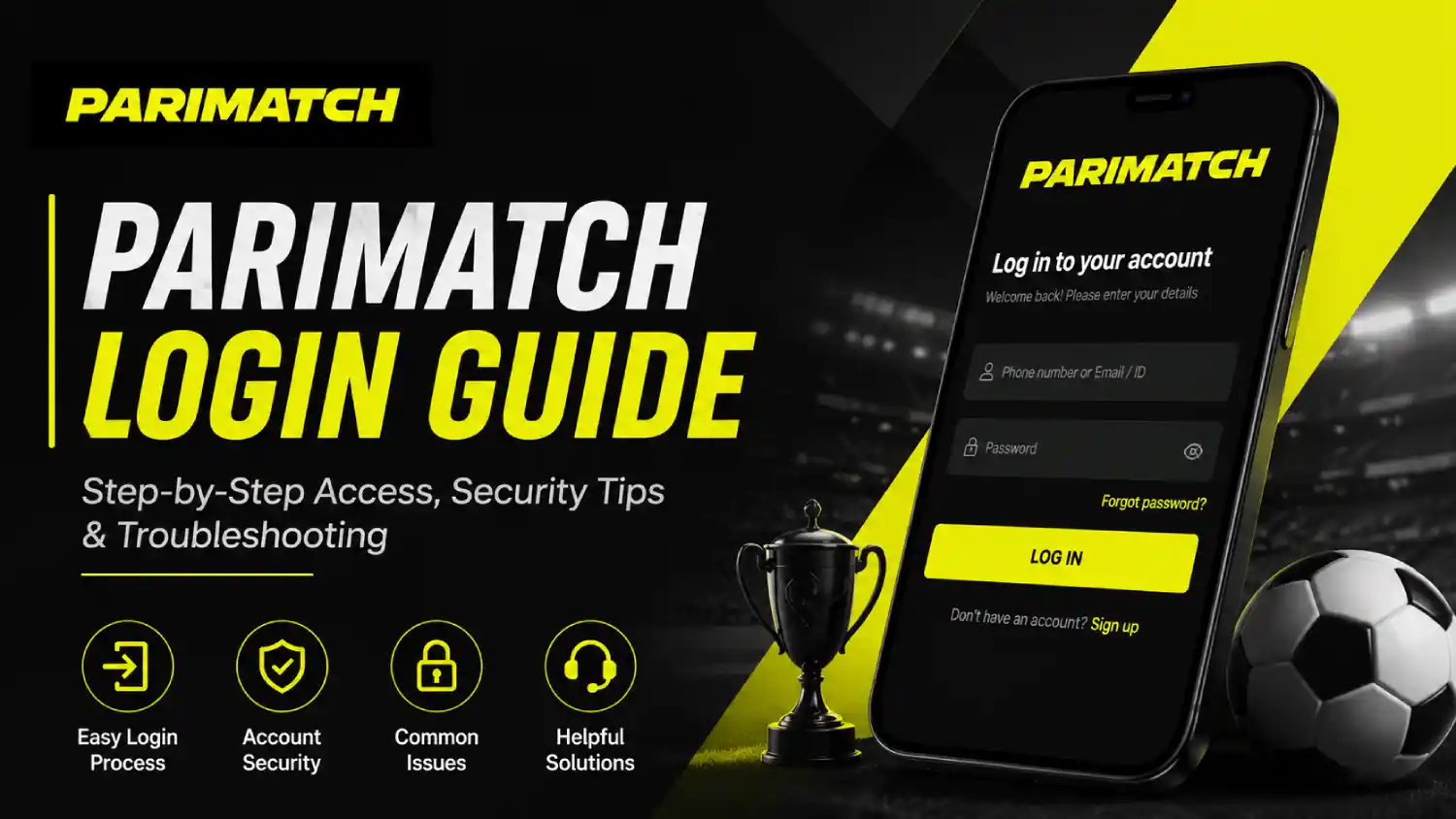
Accessing an online account should generally be a straightforward process, but users occasionally encounter login problems for a variety of reasons. These issues may stem from incorrect credentials, device settings, internet connectivity, browser compatibility, or account security measures.
If you’re researching the Parimatch login process, this guide provides a neutral overview of how account access typically works, common reasons login attempts may fail, and practical troubleshooting steps. Rather than promoting the platform, the purpose of this article is to help users understand the technical and security aspects of online account access.

Understanding the Login Process
Most online platforms follow a similar authentication process to verify a user’s identity before granting access.
A typical login involves:
- Opening the website or mobile application.
- Selecting the Login option.
- Entering a registered email address or mobile number.
- Providing the correct password.
- Completing any additional verification step if requested.
- Successfully accessing the user account.
Some platforms may also require multi-factor authentication (MFA) or a one-time password (OTP) to provide an additional layer of security.
Information Required to Log In
Before attempting to access an account, users generally need:
Registered Mobile Number or Email Address
The login credentials should match the information used during account registration.
Using an incorrect email address or phone number is one of the most common causes of failed login attempts.
Password
Passwords are case-sensitive on most platforms.
Users should pay attention to:
- Uppercase and lowercase letters
- Numbers
- Special characters
- Extra spaces added accidentally
Many login issues occur simply because of typing mistakes.
Internet Connection
A stable internet connection is essential for successful authentication.
Poor connectivity may interrupt communication between the user’s device and the platform’s servers, resulting in login failures or loading errors.
Common Parimatch Login Problems
Several factors can prevent users from successfully signing in.
Below are some of the most frequently reported issues and their possible solutions.
1. Incorrect Username or Password
This is perhaps the most common login issue.
Possible reasons include:
- Typographical errors
- Forgotten passwords
- Using an outdated password
- Attempting to log in with the wrong email address
Possible Solution
Carefully re-enter the credentials.
If the password cannot be remembered, use the official password recovery option available on the login page.
Avoid guessing repeatedly, as multiple failed attempts may temporarily lock the account.
2. Forgot Password
It’s common for users to forget passwords, especially if they manage multiple online accounts.
Password Reset Process
Most platforms provide a password recovery feature that typically involves:
- Selecting Forgot Password.
- Entering the registered email or mobile number.
- Receiving a verification code or password reset link.
- Creating a new secure password.
When choosing a new password, avoid reusing passwords from other websites.
3. Verification Code Not Received
Some platforms send a one-time password (OTP) during login or password recovery.
Occasionally, users may not receive this code immediately.
Possible reasons include:
- Weak mobile signal
- Delayed SMS delivery
- Email filtering
- Incorrect registered phone number
- Temporary service interruptions
Troubleshooting Tips
- Wait a few minutes before requesting another code.
- Check spam or junk email folders if using email verification.
- Ensure the registered phone number is active.
- Verify that your device has network connectivity.
4. Account Temporarily Locked
Repeated unsuccessful login attempts may trigger temporary account protection mechanisms.
This is a common security feature designed to prevent unauthorized access.
What to Do
- Wait until the temporary restriction expires.
- Reset your password if necessary.
- Avoid repeated login attempts using incorrect credentials.
If the issue continues, users should contact official customer support through verified channels.
5. Browser Compatibility Issues
Sometimes login problems are caused by the browser rather than the account itself.
Possible causes include:
- Outdated browser versions
- Corrupted cache
- Disabled cookies
- Browser extensions interfering with scripts
Recommended Solutions
- Clear browser cache.
- Delete cookies.
- Update the browser.
- Try another supported browser.
- Disable unnecessary browser extensions temporarily.
6. Mobile App Login Problems
Some users may encounter login issues specifically within the mobile application.
Possible reasons include:
- Older app version
- Software bugs
- Device compatibility issues
- Interrupted updates
Solutions
- Update the application to the latest version.
- Restart the device.
- Reinstall the application if necessary.
- Ensure sufficient device storage is available.
Importance of Account Verification
Many online platforms request identity verification as part of their security procedures.
Verification may help:
- Protect user accounts
- Prevent unauthorized access
- Reduce fraudulent activity
- Meet regulatory requirements in applicable jurisdictions
Depending on the platform, verification may involve confirming an email address, phone number, or providing identity documentation.
Best Practices for Account Security
Protecting login credentials is essential for maintaining account security.
Create a Strong Password
A secure password should:
- Contain at least 12 characters.
- Include uppercase and lowercase letters.
- Include numbers.
- Include symbols where permitted.
- Avoid personal information such as birthdays or names.
Password managers can help generate and store complex passwords securely.
Enable Two-Factor Authentication
If available, two-factor authentication (2FA) adds another layer of protection.
Even if someone discovers your password, they would typically still need access to the verification code generated by your device or authentication application.
Never Share Login Credentials
Legitimate customer support representatives generally do not ask for your password.
Users should never share:
- Passwords
- Verification codes
- Recovery codes
- Security questions
Doing so increases the risk of unauthorized account access.
Avoid Public Wi-Fi for Sensitive Logins
Public wireless networks may not always provide adequate security.
If logging into any account on public Wi-Fi:
- Use a trusted VPN if appropriate.
- Avoid entering sensitive information on unsecured networks.
- Log out after finishing your session.
Keeping Your Device Secure
Account security also depends on the safety of the device being used.
Users should regularly:
- Update the operating system.
- Install security patches.
- Use reputable antivirus software where appropriate.
- Remove unused applications.
- Lock devices using PINs, passwords, or biometrics.
These practices help reduce the likelihood of malware or unauthorized access.
Recognizing Phishing Attempts
Cybercriminals sometimes create fake login pages designed to steal usernames and passwords.
Common warning signs include:
- Misspelled website addresses.
- Unexpected login requests.
- Emails creating a false sense of urgency.
- Requests for passwords or OTPs via email or messaging apps.
Before entering login details, users should confirm they are on the platform’s legitimate website or official mobile application.
Frequently Asked Questions
Why can’t I log into my account?
Login problems may occur because of incorrect credentials, internet connectivity issues, browser settings, temporary account restrictions, or outdated application versions.
What should I do if I forget my password?
Use the official password recovery feature available on the login page. Follow the verification process to create a new password.
Is two-factor authentication necessary?
While not always mandatory, two-factor authentication significantly improves account security by requiring an additional verification step beyond the password.
Can I log in from multiple devices?
Many online platforms allow access from more than one device, although additional security verification may be required when logging in from a new location or device.
How can I make my account more secure?
Using a unique password, enabling two-factor authentication, keeping your software updated, and avoiding suspicious links are among the most effective ways to improve account security.
Final Thoughts
The Parimatch login process is similar to that of many modern online platforms, relying on account credentials and security checks to verify user identity. While login issues can occasionally occur, they are often resolved by checking login details, updating software, ensuring a stable internet connection, or using official account recovery tools.
Good cybersecurity habits—such as creating strong passwords, enabling multi-factor authentication, and being alert to phishing attempts—can help protect not only this account but any online service you use. By understanding common login challenges and following recommended security practices, users can reduce the likelihood of access problems and keep their personal information better protected.